Digital vs Printed Greeting Cards: Which Should You Choose?
Digital and printed greeting cards can carry the same warm, personal message, but they create different experiences. An electronic card is convenient because of its speed, interactivity, and online access, while a printed card becomes a physical keepsake that can be saved for years.
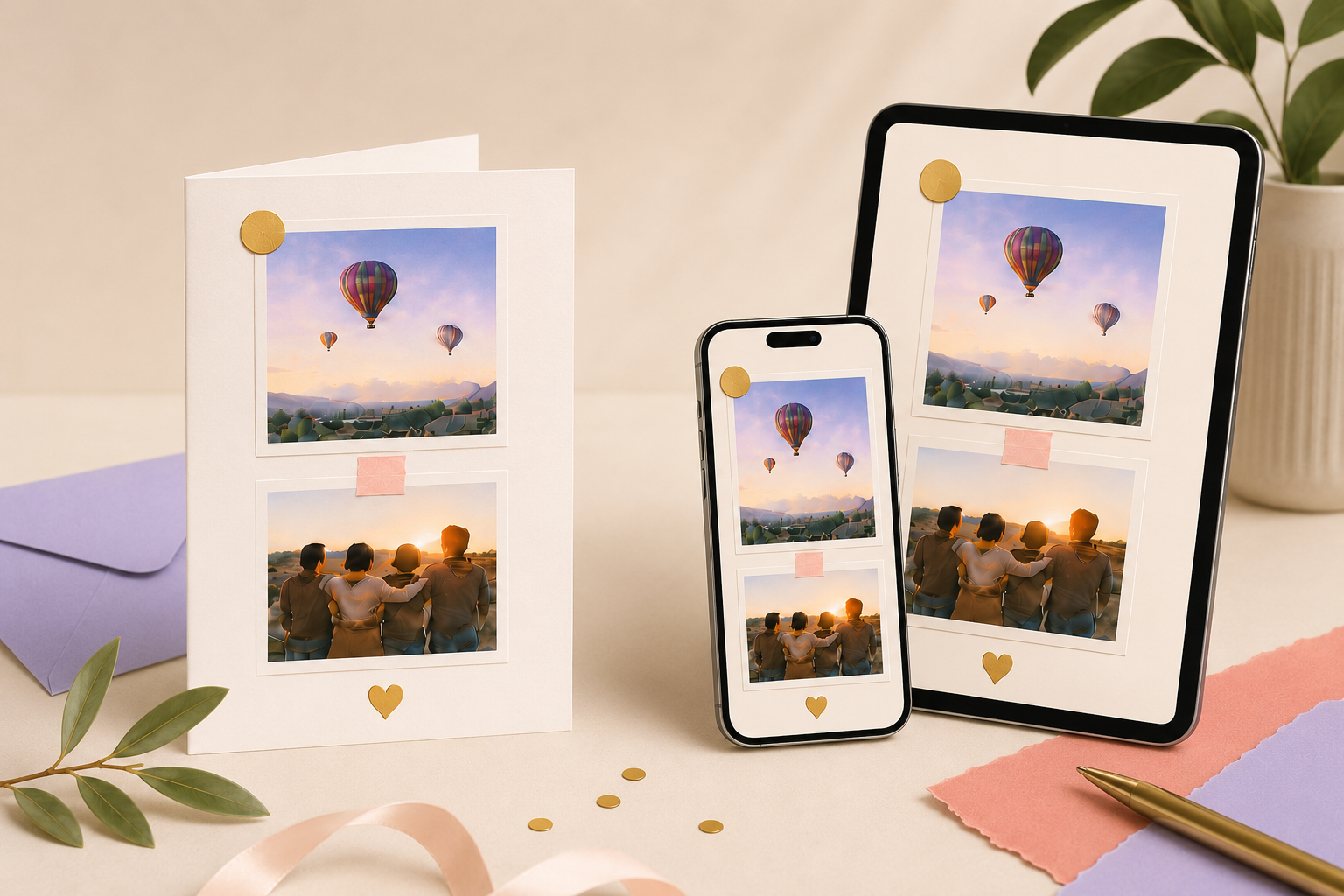
What Is a Digital Greeting Card?
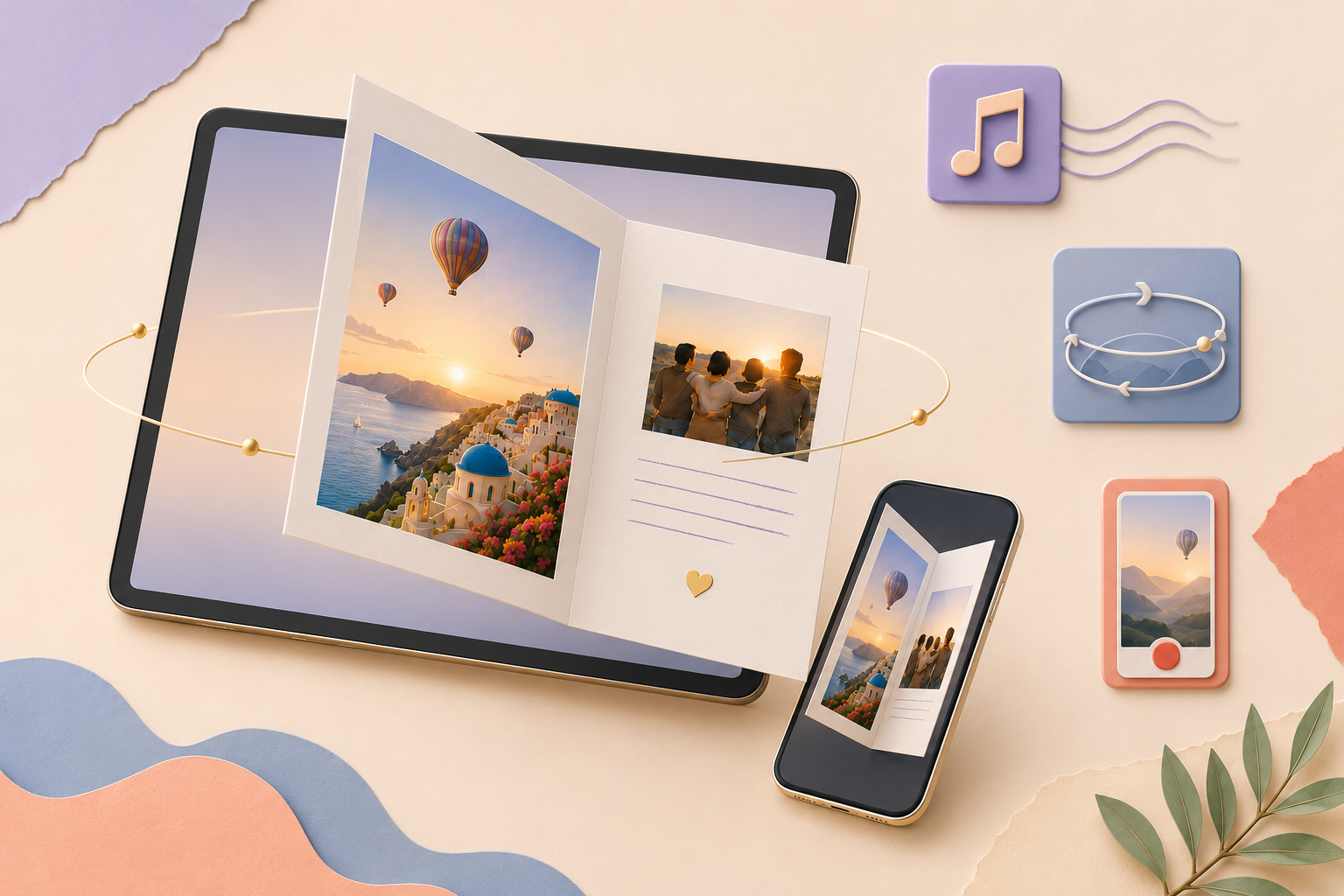
A digital greeting card, or e-card, is a card that the recipient opens online on a phone, tablet, or computer.
This format is especially convenient when the delivery date matters, the recipient lives far away, or you want to add interactive elements to the greeting.
In Card can Fly, an electronic greeting card can include features that are not available in a traditional printed card. For example, you can add Spotify music, a 360° panorama, and view the card in interactive 3D.
The recipient can rotate the card, view it from different angles, and interact with the digital design.
Digital cards work well for:
- birthdays;
- anniversaries;
- weddings and other celebrations;
- friends and relatives living abroad;
- long-distance relationships;
- coworkers and remote teams;
- spontaneous thoughtful messages.
What Is a Printed Greeting Card?
A printed greeting card is physically printed and delivered.
In Card can Fly, you can send a printed card directly to the recipient or order it to your own address so you can give it in person or send it yourself using your preferred delivery method.
One of the main advantages of a printed greeting card is that it becomes a real object. It can be displayed on a shelf, kept with photographs and letters, or saved as a reminder of an important occasion.
Card can Fly cards are printed in photographic quality, so they can also be used as a small decorative piece. For example, a card featuring a favorite photograph or memorable design can be placed in a frame instead of a regular photo.
A physical card can feel especially personal when it contains your own photographs, a custom message, artwork, or a handwritten signature.
Printed greeting cards are especially suitable for:
- birthdays;
- weddings;
- anniversaries;
- the birth of a baby;
- graduations;
- Christmas and other holidays;
- family celebrations;
- greetings that you want someone to keep;
- occasions when you want to hand the card to the recipient personally.
What Is the Difference Between a Digital and Printed Card?
The main difference between a digital and printed greeting card is how it is delivered and how the recipient experiences it.
An electronic card is opened online. A printed card is physically delivered and stays with the recipient as a keepsake.
That does not mean one format is always better than the other.
A digital greeting card provides more interactive possibilities and reduces dependence on postal delivery times. A printed card creates a more traditional experience, can be kept for years, and thanks to photographic-quality printing can even become part of the recipient’s home decor.
The right choice depends on the occasion, distance, delivery timing, and the experience you want to create.
Personalization Options
Both digital and printed greeting cards can be made truly personal.
This means personalization is not limited by whether you choose a digital or printed format.
The main difference is how the recipient sees and receives your card.
With Card can Fly, you can:
- upload your own photos;
- write a personal message;
- customize backgrounds and design elements;
- create a photo collage;
- add your own drawing;
- use a personal or handwritten signature;
- choose a ready-made template;
- create a design from scratch.
When Should You Choose a Digital Greeting Card?
A digital greeting card is especially useful when speed, a specific delivery date, and online access matter.
With Card can Fly, you do not have to choose between a printed and electronic card. Any printed greeting card can be duplicated as a digital version for free.
The sender chooses the delivery date for the electronic card. Once that date is reached, the recipient can open it at any convenient time.
You also do not have to decide on digital delivery in advance. The sender can generate an electronic link to an existing card at any time, regardless of whether the card was originally created as a digital or printed card and even if electronic delivery was not originally planned.
This gives you additional flexibility. For example, if a printed card is delayed or your plans change, you can quickly generate a digital link and share it with the recipient.
If digital delivery was scheduled in advance, the card becomes available from the date selected by the sender. The printed version can continue on its way and later remain with the recipient as a physical keepsake.
This means an electronic card in Card can Fly can be used together with a printed card rather than simply replacing it — or added later if the need arises.
A digital format is especially convenient if you want to:
- make sure a greeting is available on a specific date;
- avoid depending entirely on postal delivery times;
- quickly generate an electronic link after the card has already been created;
- send a card internationally;
- add music;
- use a 360° panorama;
- show the card in interactive 3D;
- create a Reel from the 3D view;
- send a greeting to someone who prefers digital communication.
How to Create a Reel from a 3D Card
A digital card in Card can Fly can not only be opened online, but also turned into a short video for social media.
While viewing the card in 3D, you can record a Reel and then use it, for example, for a post on Instagram or Facebook.
When creating the video, you can choose how the card is presented.
You can use automatic viewing, where the card is displayed automatically, or control it manually by rotating it and choosing the angles you want to show.
If the card includes a 360° panorama, its selected state is also reflected in the recording. You can decide before starting whether you want the card shown with the panorama enabled or disabled.
This lets you show not only a static design, but also how the card looks and moves in 3D.
The electronic card itself can still remain a personal greeting for the recipient, while the Reel becomes an additional way to share the design with others.
Reels are especially useful for:
- birthday greetings;
- weddings and anniversaries;
- travel cards;
- holiday cards;
- cards with panoramas and photographs;
- situations where you want to share your design on social media.
When Should You Choose a Printed Greeting Card?
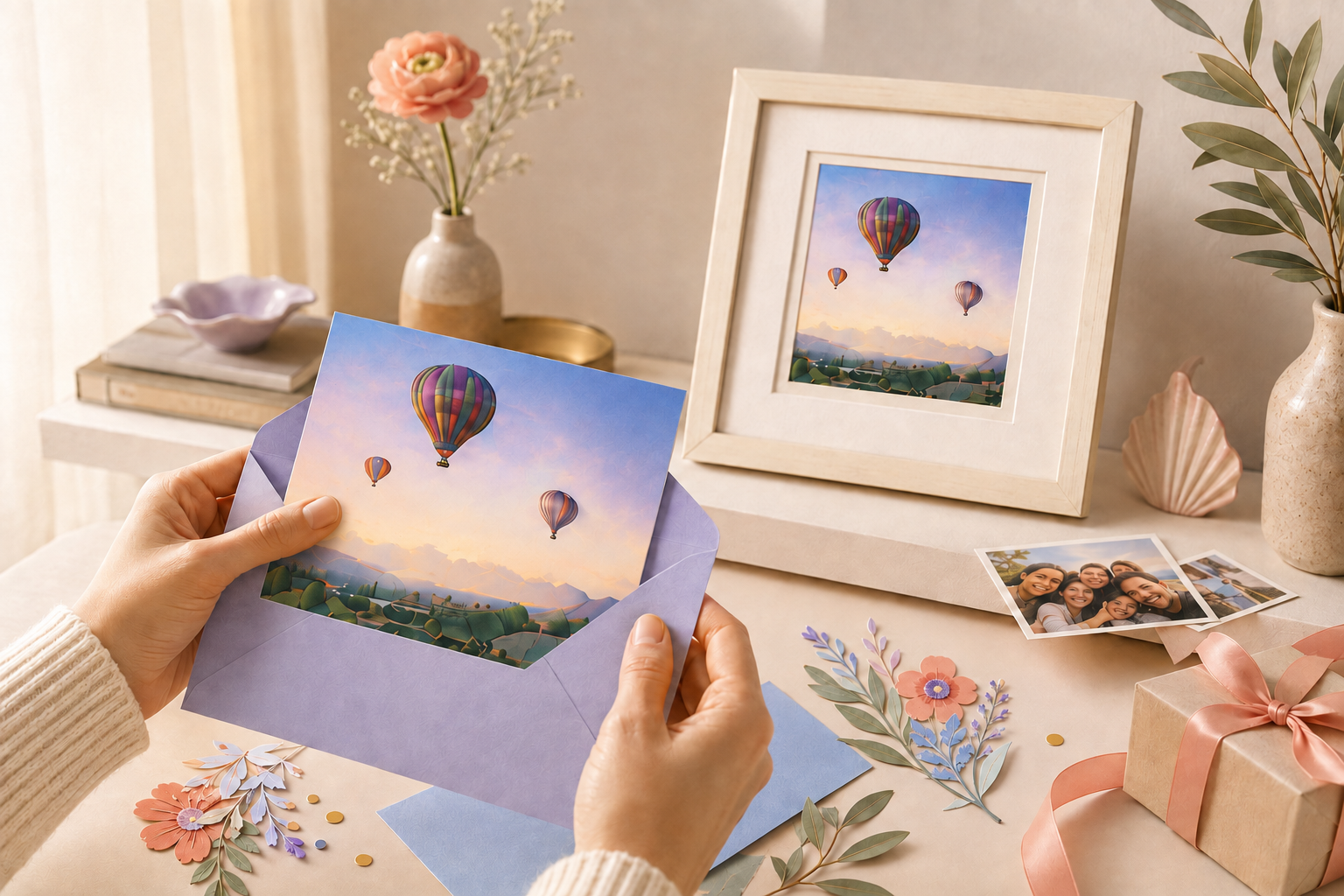
A printed greeting card is a good choice when the physical format itself is part of the gesture.
Receiving an envelope, opening it, and discovering a personalized card creates an emotional experience that cannot be fully reproduced on a screen.
For weddings, anniversaries, milestone birthdays, the birth of a baby, and other important occasions, a printed card can become a meaningful keepsake.
Choose a printed card when you want to:
- give someone something they can keep;
- mark an important occasion;
- create a more traditional greeting;
- send family photographs;
- make the card part of a gift;
- create a physical memory of the event;
- frame the card and use it like a small photograph or decorative print;
- give the card in person;
- choose your own delivery method.
Group Card Sending
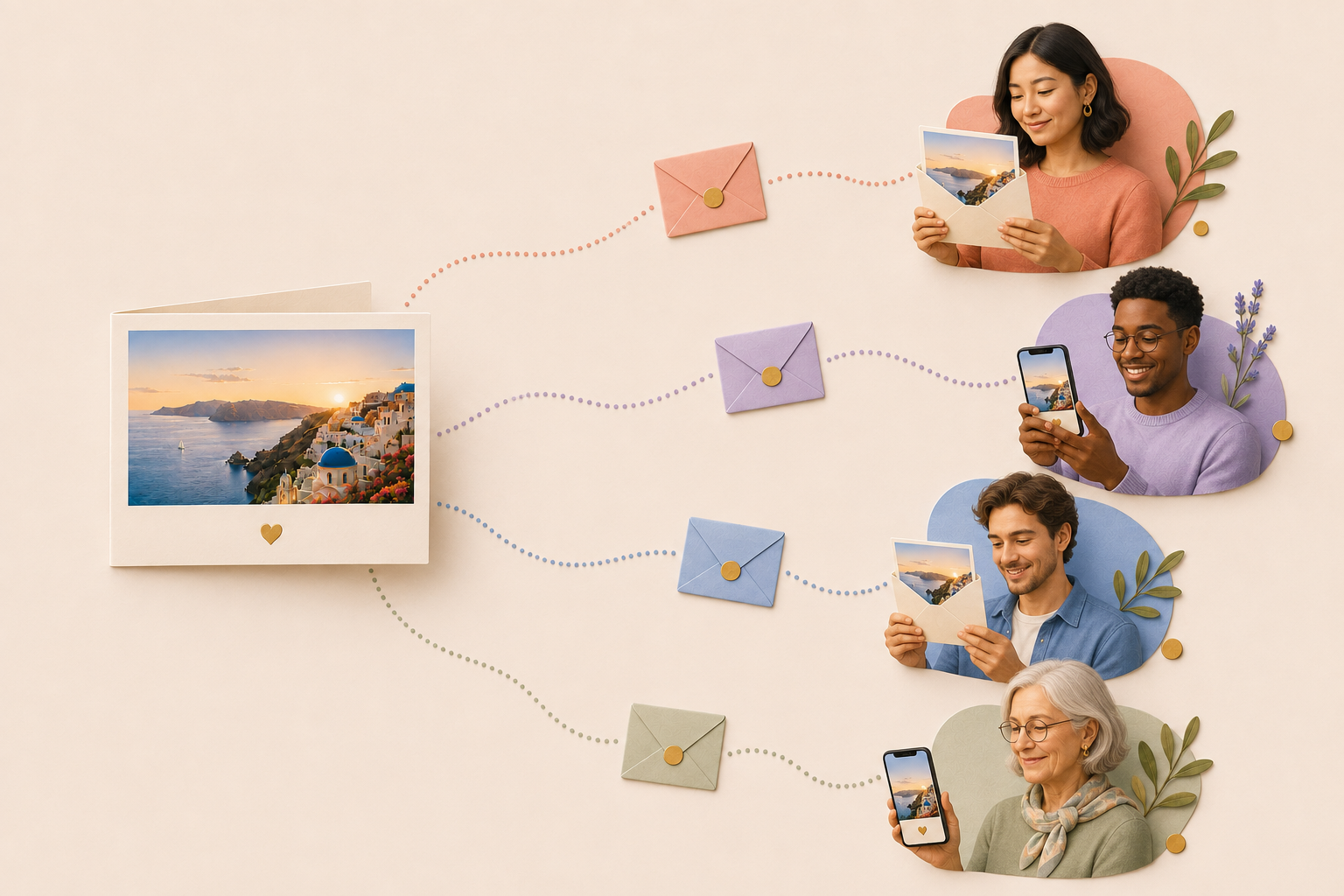
Group sending is available for all cards in Card can Fly.
This is useful when you want to send the same card to several recipients, such as relatives, friends, coworkers, clients, or members of a team.
Instead of creating and sending each card separately, you can use one design for multiple recipients.
Group sending is available for both electronic and printed cards.
Group sending works particularly well for:
- holiday greetings;
- Christmas and New Year cards;
- wedding thank-you cards;
- corporate greetings;
- invitations and commemorative messages;
- greetings for a larger group of friends or relatives.
Can You Order Printed Cards for Yourself?
Yes.
With Card can Fly, printed cards do not have to be delivered directly to the final recipient. You can order them to your own address.
This gives you more control over how and when the physical card reaches the recipient.
This is useful if you want to:
- give the card in person;
- place it inside a gift;
- add something by hand;
- mail the card yourself;
- use your own delivery method;
- order several cards in advance for future occasions;
- frame the card and keep it or give it as a small photographic print.
What Should You Choose for a Last-Minute Greeting?
If the important date is already close, an electronic greeting card is usually the more convenient option.
It does not depend on physical delivery and becomes available to the recipient from the date selected by the sender.
With Card can Fly, this is especially useful because a digital version can be added to a printed card for free.
You can also do this later. If you originally planned to send only a printed card but realize that it might not arrive in time, you can generate an electronic link and send it to the recipient.
This means you do not have to give up the printed card just because there is a risk of delayed delivery.
How to Send Cards Over Long Distances
If friends, relatives, or coworkers live in another country, physical delivery times may be less predictable.
In this situation, an electronic card can make the greeting available on the intended date regardless of how long the printed card takes to arrive.
You can still send the printed version as a physical keepsake.
If you decide later that an electronic version would be useful, the sender can generate a link and share it with the recipient.
That is why combining the two formats is often convenient for international greetings: a digital card for timely delivery and a printed one as a physical memory.
Which Format Is Better for Important Occasions?
For weddings, anniversaries, milestone birthdays, graduations, and the birth of a baby, a printed greeting card is often seen as the more traditional choice.
It can be kept together with other keepsakes, photographs, and gifts. Thanks to photographic-quality printing, a particularly meaningful card can also be framed and displayed as part of the memory of the occasion.
However, a digital version can complement the printed card.
Music, 3D viewing, a 360° panorama, and the ability to create a Reel make an electronic card an experience of its own.
For important occasions, you therefore do not always have to choose just one format.
In many cases, the best option is to combine a physical card with a digital version.
Can You Send a Digital and Printed Card Together?
Yes.
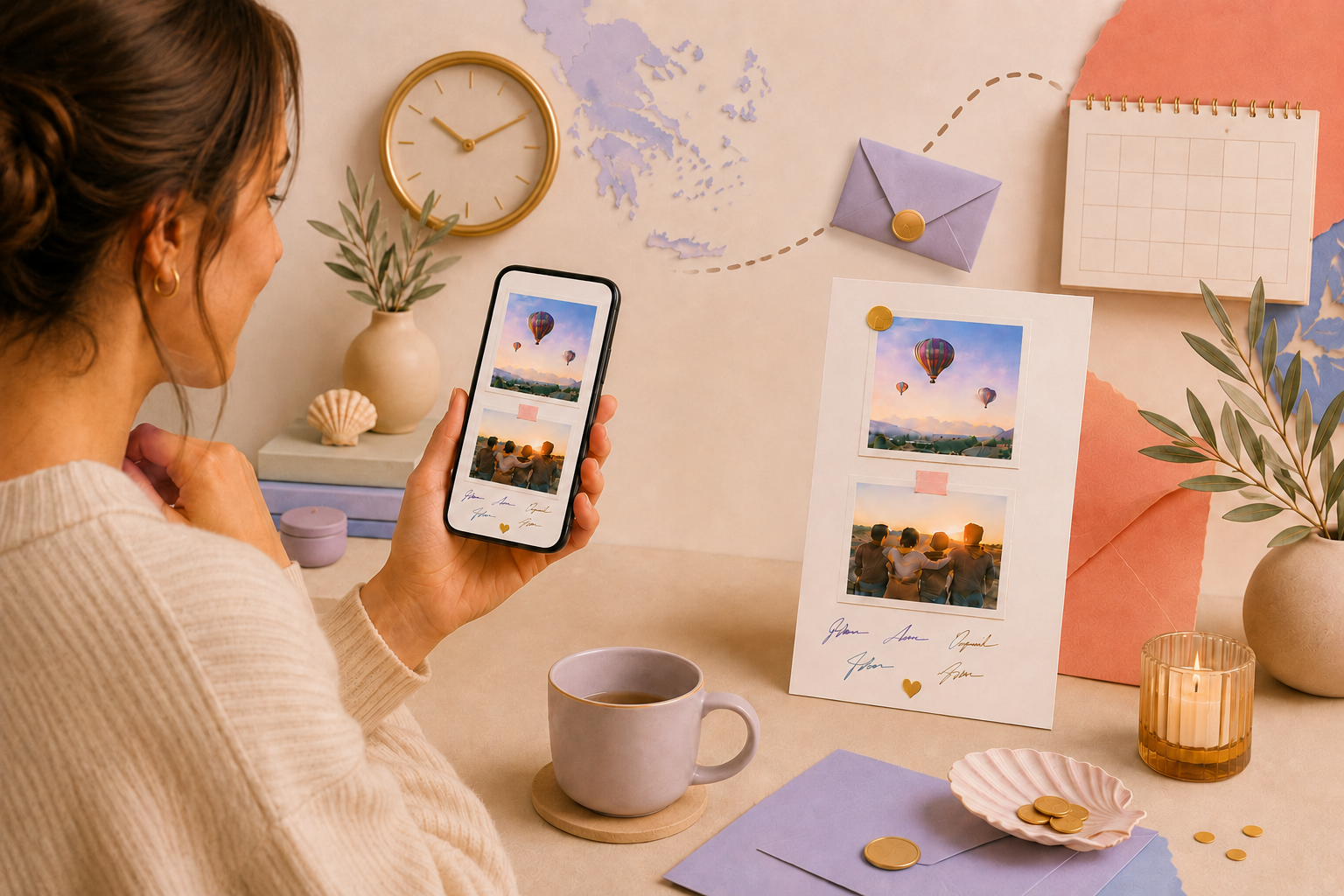
With Card can Fly, any printed greeting card can be accompanied by a free electronic copy.
When setting it up, the sender can choose the delivery date for the electronic version. From that date onward, the recipient can open the card online at any convenient time.
An electronic link can also be generated later — even if the card was originally created only for printing and digital delivery was not planned.
This is especially useful for international deliveries, birthdays, weddings, anniversaries, and other occasions tied to a specific date.
You can also send an electronic card without ordering a printed version.
Graphic files are available for created cards, so the design can be saved digitally or printed independently if needed.
This lets you combine the advantages of both formats:
- the electronic version can become available on the intended date;
- a link can be generated later if plans change;
- the printed card is physically delivered;
- postal delays do not prevent you from greeting someone on time;
- the recipient still receives a real card to keep.
Digital or Printed Greeting Card: Which Should You Choose?
If speed, interactivity, and control over the date when the greeting becomes available are important to you, a digital greeting card is a convenient choice.
If you want to give someone a physical item they can keep or even frame, a printed greeting card is the better option.
But the two formats do not have to compete with each other.
With Card can Fly, you can send a printed card and add a free electronic copy. The sender can choose the electronic delivery date in advance or generate a link later if the need appears after the card has already been created.
Group sending is available for all cards, and printed cards can be ordered not only directly to recipients but also to yourself — so you can hand them over personally, send them yourself, or use them as small keepsake prints.
Card can Fly therefore lets you choose not only the format of the card, but also the most suitable way to deliver and use it.
Whatever format you choose, the most important thing is to make the greeting personal.
Once you have chosen the right format, browse the CardCanFly greeting card collections and personalize a design with photographs, your own message, a drawing, signature, music, panorama, or other meaningful elements.
Go to greeting card collections