
Postcard vs Greeting Card: What Is the Difference?
Learn how a Postcard differs from a folded Greeting Card. Compare their format, purpose, personalization options, and printed or electronic delivery.
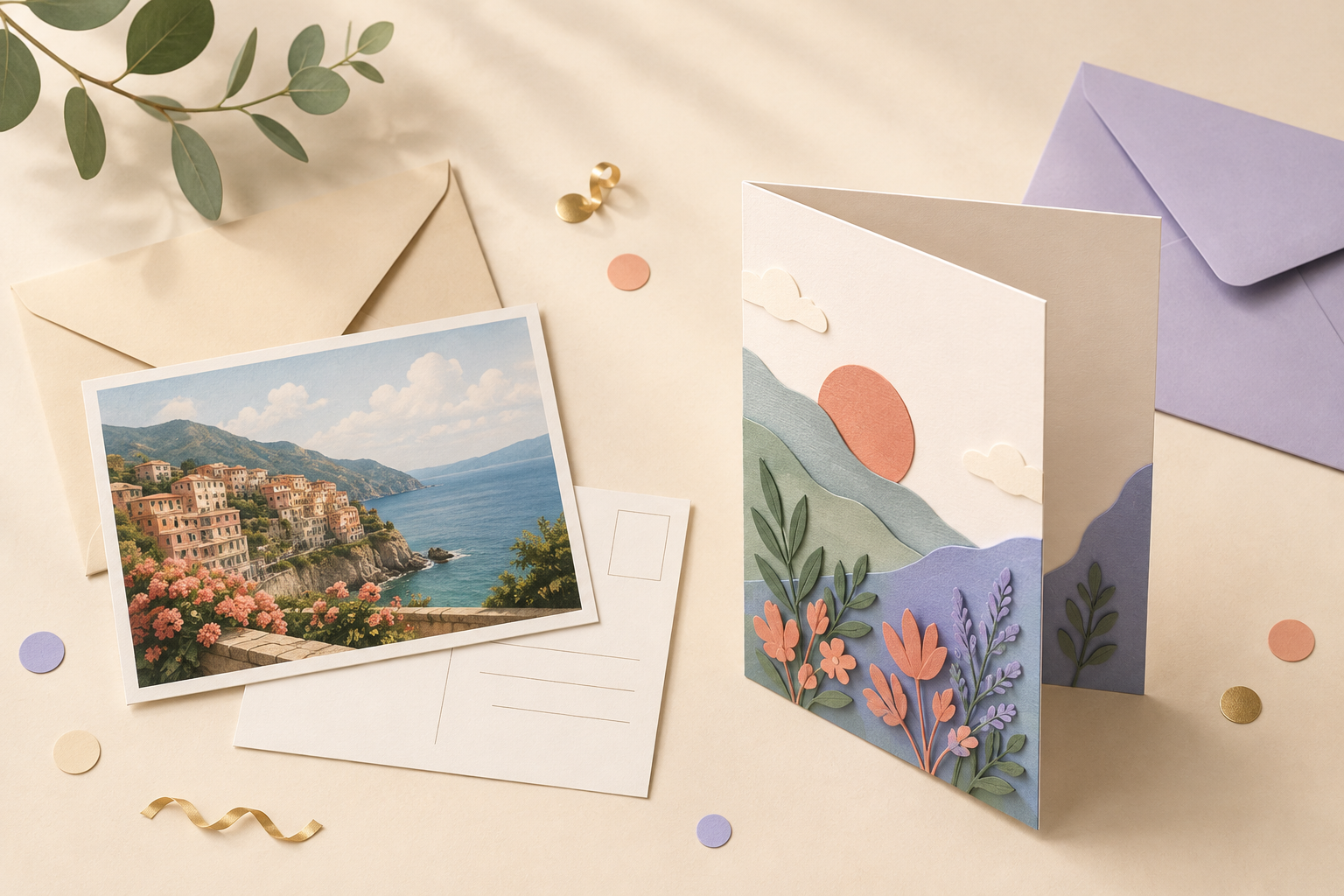
What Is a Postcard?
A postcard is a flat, sturdy sheet without a fold. The front can feature a travel photo, family picture, collage, illustration, themed design, or short greeting.
The back leaves room for a personal message and signature. Card can Fly places each printed postcard in an envelope to protect the design and keep the message private during delivery. This format works especially well for:
- Travel and family photos
- Photo collages and illustrations
- Short greetings, invitations, or thank-you messages
What Is a Greeting Card?
A greeting card is a folded format with a cover, inside, and back. The cover introduces the design, while the inside provides more space for wishes, photographs, signatures, or a longer message.
Its folded construction makes it feel like a small personal gift. Common occasions and uses include:
- Birthdays, weddings, and anniversaries
- Christmas and New Year
- The arrival of a new baby
- Graduations and professional celebrations
- Holidays and important milestones
- Greetings from relatives, friends, or colleagues
- Longer greetings and messages from a group
The Main Difference Between the Formats
The main difference is construction and available space: a postcard is one flat sheet for a short message, while a greeting card folds open and offers a larger inside area.
The boundary is not strict. A flat postcard can be festive, and a folded card can contain only a few warm words. Choose the format according to the occasion, message, and visual idea.
Complete Card Personalization
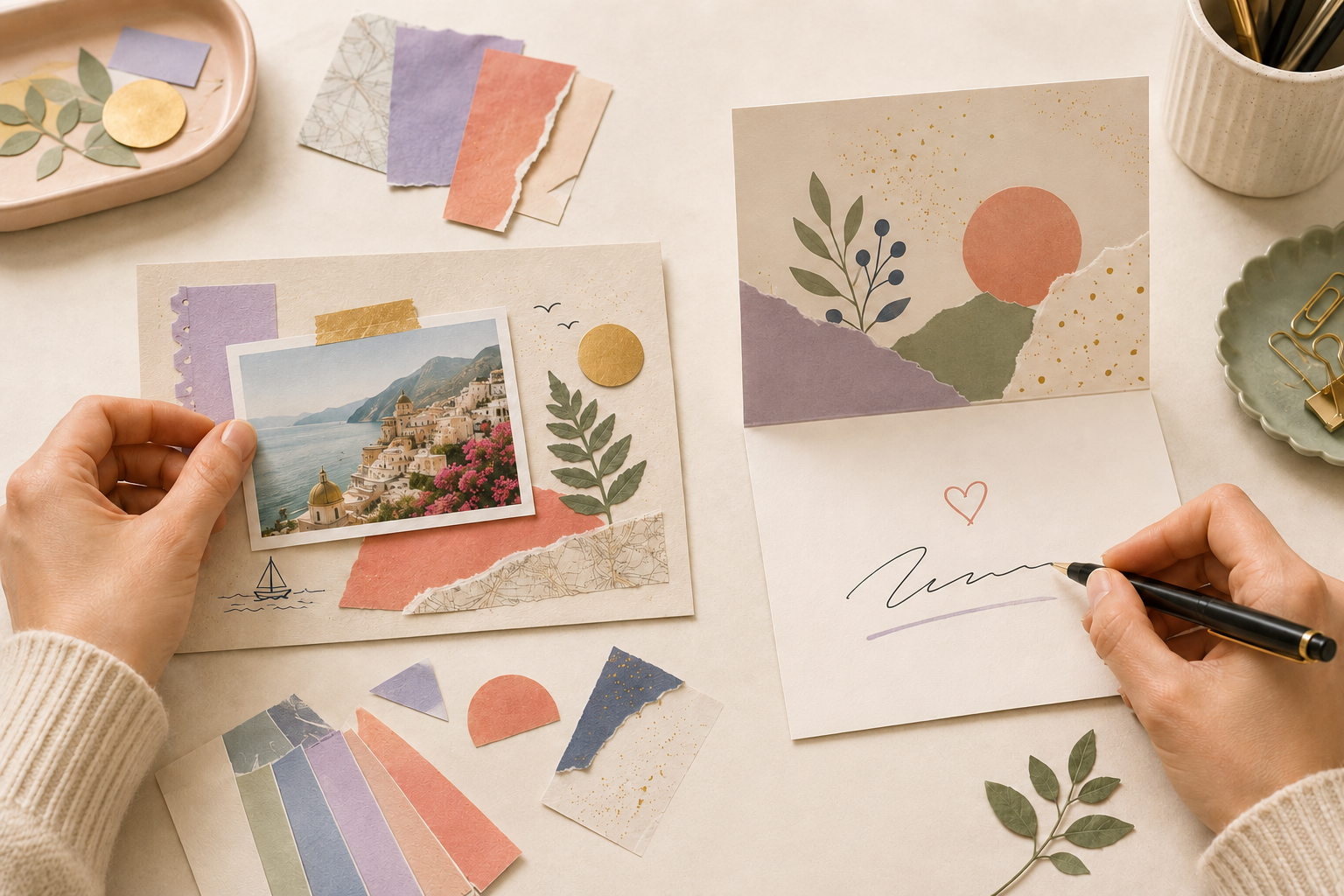
In Card can Fly, both formats support full personalization. Start with a ready-made template or a blank layout and adapt the card to a person, occasion, communication style, and mood.
You can personalize your card in the following ways:
- Upload your own photographs
- Add text and change the background
- Use themed decorative elements
- Create a photo collage or your own drawing
- Add a personal or handwritten signature
- Start with a ready-made template or a blank design
Printed or Electronic Card
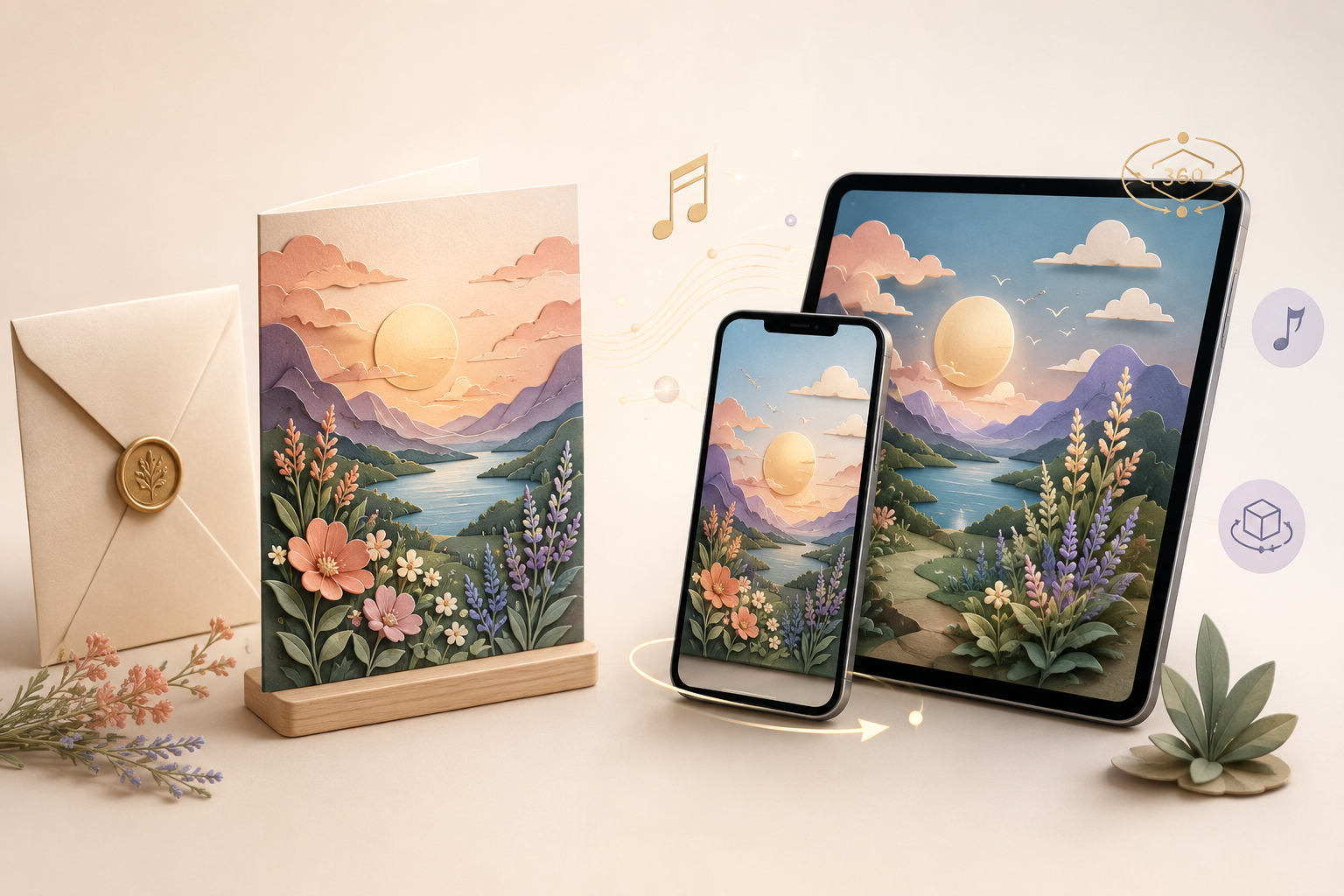
When sending any printed card through Card can Fly, you can add a free electronic copy. The recipient can open the digital version even if delivery of the printed card is delayed. This helps ensure that the greeting arrives on time and cannot be lost in transit.
You can also send an e-card on its own, without ordering a printed copy or postal delivery. An e-card can be made interactive by adding music from Spotify or an immersive 360° panorama.
The recipient can open the card on a screen, explore its design, listen to the selected music, and view the attached panorama. All Card can Fly cards can also be viewed in 3D, both in the editor before sending and in the electronic version received by the recipient.
Graphic files are available for every card you create, whether it is sent only electronically or printed and accompanied by a free electronic copy. The recipient can download them to:
- Print the card independently
- Save it as a digital keepsake
- Use it as wallpaper on a phone, tablet, or computer
- Add it to a digital photo album
How to Choose the Right Format
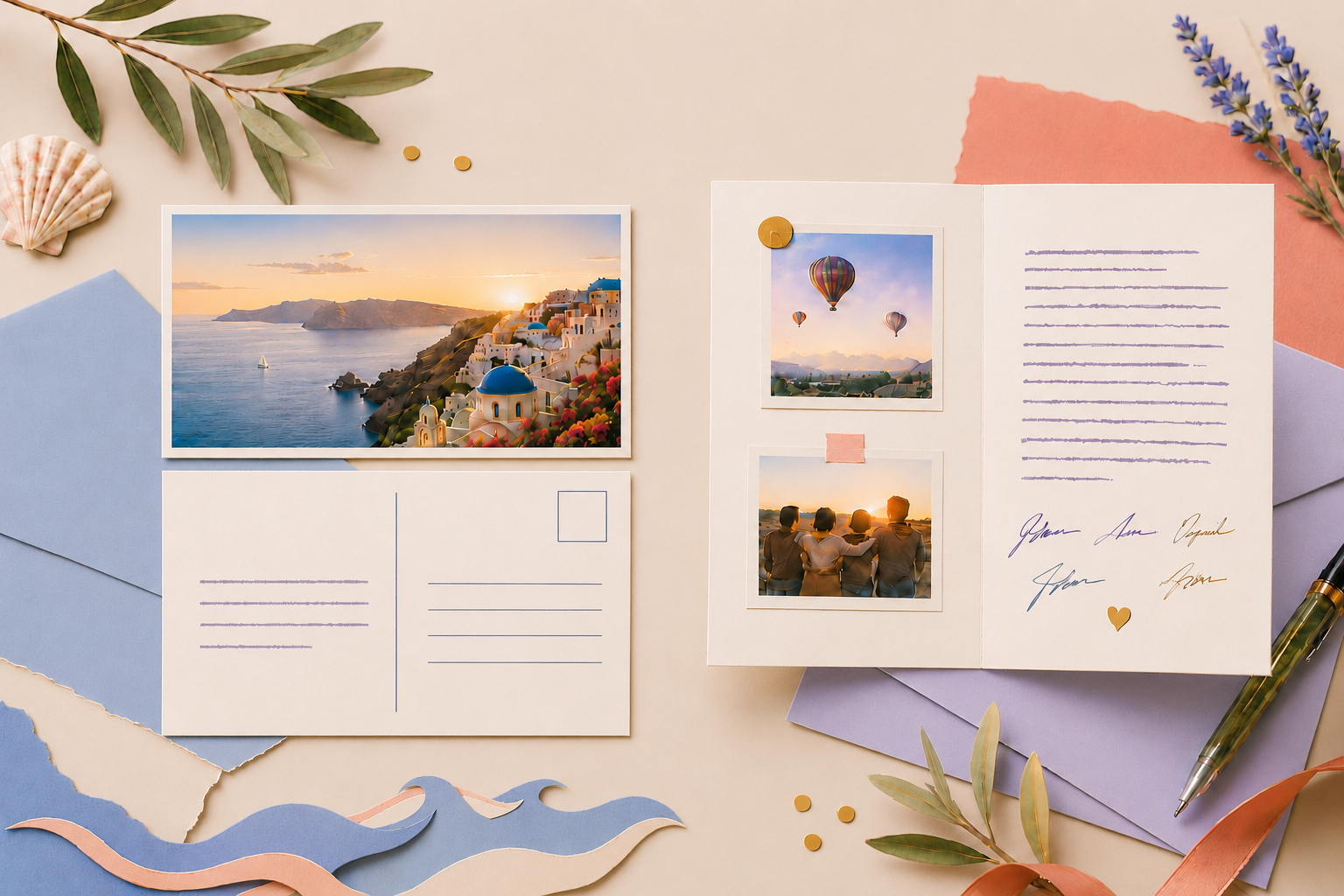
Choose a postcard when the main element is a photograph or image and a few personal lines are enough. It is a natural fit for travel memories, a short hello, a thank-you, an invitation, or a spontaneous sign of attention.
Choose a greeting card when the occasion is important or the message needs more room. Its inside can hold a long greeting, poem, family story, several photographs, or signatures from a whole group.
When to Choose a Postcard
A Postcard is a good choice when the image is the central element and the message can be expressed in a few sentences. A carefully selected photograph and a few personal words can often communicate more emotion than a long formal message. Choose this format when you want to:
- Send a photograph from a trip
- Share a family picture
- Say a quick hello or thank someone
- Send an invitation
- Preserve the memory of an important moment
- Surprise someone without a particular occasion
When to Choose a Greeting Card
A Greeting Card is usually better for an important occasion or whenever you need more writing space. Its folded structure separates the cover design from the main greeting: the recipient first sees the outside and then opens the card to discover the personal message.
This format is suitable when the greeting should feel especially thoughtful, formal, or personal. Inside, you can include:
- A longer greeting or poem
- A personal or family story
- A meaningful quotation
- Several photographs
- Signatures from several people
- A message from an entire team
Which Format Works Best for a Group Greeting?
For a greeting from family, friends, or colleagues, a folded greeting card is often more convenient. The inside provides enough space for a shared message, several personal wishes, and signatures.
A postcard can also work well for a photo collage, the names of everyone taking part, or a short group greeting. An electronic version is especially useful for remote teams, international companies, and people living in different countries.
Choosing by Occasion and Amount of Text
For a short hello, a travel photograph, or an unexpected sign of attention, choose a classic postcard. For a birthday, wedding, anniversary, or another important event, a folded greeting card is usually the better choice.
If a few lines are enough, choose a flat postcard. A longer greeting, poem, family story, or several signatures will be more comfortable inside a folded card.
What Matters More: the Photo or the Text?
When the photograph is the main element, a classic postcard helps make the image the central part of the design. When the message matters most, a folded card provides more room inside for a detailed greeting.
Both formats support full personalization in Card can Fly. You can add photos, decorative elements, text, your own drawing, or a personal signature, so the choice does not have to depend only on the balance between image and text.
Do You Need a Printed Version?
A printed postcard becomes a physical memory that can be placed on a shelf, attached to a wall, or kept with photographs and letters. It can also be complemented with a free electronic copy.
You can send only an electronic card with Spotify music or a 360° panorama. Recipients can view the card in 3D and download its graphic files, whether the card is printed or sent only online.
Postcard or Greeting Card: Which Should You Choose?
The best choice depends on the occasion, amount of text, importance of the image, and the impression you want to make. Both formats can be personalized and sent in printed or electronic form.
Once you know which format suits your idea, browse the Card can Fly collections and choose a ready-made template or start from a blank layout. Then add photos, text, drawings, signatures, decorative elements, and a themed background.
Go to greeting card collections